B2 Story Business Rise & Fall

What Happend to Blackberry ? The Rise & Fall

How the world's most powerful smartphone company destroyed itself in less than a decade.

Reading level

Switch if this feels too hard or too easy.

Listen to this article

At its peak, a single Canadian company controlled half of the American smartphone market and carried a valuation of $83 billion. Within a few years, its market share had collapsed to essentially zero. The story of BlackBerry is one of the most dramatic corporate implosions in modern technology history β€” and it was almost entirely self-inflicted.

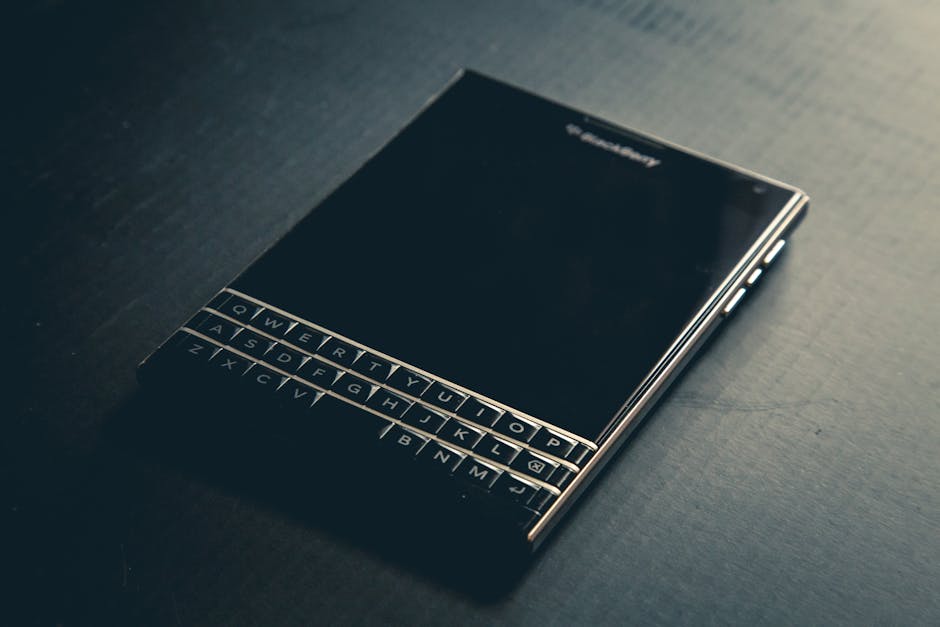
Research in Motion was founded in 1984 by two engineering students, Mike Lazaridis and Douglas Fregin, working out of a small space above a bagel shop in Waterloo, Ontario. The company spent its early years focused on wireless infrastructure and data compression β€” unglamorous work, but foundational. Everything changed in 1996 when RIM launched an interactive pager with push email, technology that delivered messages the moment they arrived. For lawyers, bankers, and executives, it was transformative. By 2003, the BlackBerry 7230 had combined secure email with a full physical keyboard and calling functionality, cementing the device as the essential tool of the professional class. Its stock climbed from $2.15 to roughly $150 per share. Even a U.S. president carried one. BlackBerry wasn't just a phone β€” it was a status symbol.

Then came January 2007. Apple introduced the iPhone, and BlackBerry's leadership reportedly dismissed it as a device that couldn't handle carrier network demands. That assessment was catastrophically wrong. Apple hadn't built just a phone β€” it had built a computing platform. When the App Store launched in 2008, it quickly accumulated over 300,000 applications. BlackBerry's catalog numbered fewer than 10,000. The gap was never closed.

Internal fractures made things worse. Co-CEOs Lazaridis and Jim Balsillie disagreed fundamentally about the company's direction β€” whether to chase mainstream consumers or double down on enterprise clients. This tension paralyzed decision-making at the exact moment when speed was everything. BlackBerry Messenger had grown to 60 million users by 2011, years ahead of competitors. There was a real opportunity to license BBM across other platforms β€” a strategy that WhatsApp would later execute so successfully it sold to Facebook for $22 billion. BlackBerry rejected that path to protect its hardware business, and the moment passed.

The product failures that followed were punishing. The BlackBerry Storm, designed as a touchscreen rival to the iPhone, was plagued by software crashes caused by a faulty mechanical switch. The PlayBook tablet launched without native email functionality β€” a remarkable oversight for a company that had built its entire reputation on email. RIM took a $485 million write-off on unsold inventory and reportedly paid people $10 each just to attend promotional events in New York City.

The financial unraveling was swift. Thousands of employees were laid off, retail locations closed, and U.S. market share plummeted from 50 percent to 8.1 percent. By 2016, it had reached zero. Fairfax Financial eventually acquired the company and took it private.

What makes BlackBerry's collapse so instructive is where the failure truly began. BlackBerry's greatest strengths β€” security, enterprise loyalty, hardware precision β€” became anchors rather than engines once consumers, not corporations, started defining what a smartphone should be. The company had mastered one world and couldn't see that the world had moved on. For anyone studying how dominant businesses lose their edge, BlackBerry remains the essential case study.


Get more from every article

Highlight any word or phrase for an explanation or translation, save vocabulary, and bookmark articles.

πŸ“š Key vocabulary

implosion (noun)
a sudden and dramatic internal collapse of an organization or system
"The accounting scandal triggered a complete implosion of the firm's leadership team within weeks."
paralyze (verb)
to make someone or something unable to act, move, or function effectively
"Disagreements between the board members paralyzed the company's ability to respond to the crisis."
write-off (noun)
an official recognition that an investment or asset has lost its value and must be removed from financial records
"The failed product launch resulted in a $200 million write-off that damaged investor confidence."
foundational (adj)
relating to the essential base or starting point on which something larger is built
"Understanding customer needs is foundational to building a successful product strategy."
plummet (verb)
to fall very quickly and steeply in value, number, or level
"After the negative press coverage, the company's stock price plummeted by 30 percent in a single day."

✨ Useful phrases for this topic

"double down on"
Use this phrase when describing a decision to commit even more strongly to an existing strategy or position, especially when others might expect a change.
"Despite falling sales, the leadership team decided to double down on their premium pricing strategy rather than compete on cost."
"the moment passed"
Use this phrase to describe a missed opportunity that will not return, often because a decision was delayed or rejected at the critical time.
"They considered entering the streaming market in 2015, but hesitated for too long, and the moment passed."
"lose one's edge"
Use this phrase when a person, team, or company that was once highly competitive gradually becomes less sharp, innovative, or dominant in its field.
"After years without a major product update, analysts began to question whether the brand had permanently lost its edge."

Advanced sentence structures

Patterns from this article you can use in meetings, emails, and everyday English

Structure 1

In context

BlackBerry's greatest strengths β€” security, enterprise loyalty, hardware precision β€” became anchors rather than engines once consumers, not corporations, started defining what a smartphone should be.

The skeleton

Frame: [Subject]'s greatest [noun] became [negative metaphor] rather than [positive metaphor] once [new condition or shift].

What it does: Shows how a former advantage turned into a disadvantage when circumstances changed.

Quick swap: "The team's greatest asset β€” its cautious planning style β€” became a burden rather than a strength once the market started moving faster."

More examples

  • "The chef's obsession with tradition became a limitation rather than an asset once younger diners started demanding fusion menus."
  • "Her careful, methodical approach became an obstacle rather than an advantage once the project required fast, flexible decisions."
  • "The school's strict exam focus became a drawback rather than a selling point once employers started prioritising creative thinking."

Easy exercise

Arrange the words and add the missing structural elements to build a correct sentence.

  1. physical keyboard Β· a weakness rather than a strength Β· BlackBerry's iconic Β· consumers wanted touchscreens Β· became Β· once
  2. the factory's size Β· a burden rather than an advantage Β· became Β· demand dropped sharply Β· once
Show answers
  • "BlackBerry's iconic physical keyboard became a weakness rather than a strength once consumers wanted touchscreens."
  • "The factory's size became a burden rather than an advantage once demand dropped sharply."

Open exercise

Write your own sentence using this structure. You can write about anything β€” here are some ideas if you need them:

  • A technology or tool that used to be helpful but is now outdated
  • A skill or habit that worked well in a previous job but caused problems in a new one
  • A personal quality that helped you in school but made adult life harder

One possible answer: "My habit of working alone became a weakness rather than a strength once I moved into a role that depended entirely on collaboration."

Structure 2

In context

BlackBerry Messenger had grown to 60 million users by 2011, years ahead of competitors. There was a real opportunity to license BBM across other platforms β€” a strategy that WhatsApp would later execute so successfully it sold to Facebook for $22 billion. BlackBerry rejected that path, and the moment passed.

The skeleton

Frame: There was a real opportunity to [action], but [subject] rejected that path, and the moment passed.

What it does: Marks a turning point where a chance was missed, adding a sense of regret or lost potential to a story.

Quick swap: "There was a real opportunity to expand into the European market, but the board rejected that path, and the moment passed."

More examples

  • "There was a real opportunity to launch a podcast in those early years, but she rejected that path, and the audience went elsewhere."
  • "There was a real opportunity to negotiate a better contract, but he rejected that path, and the company hired someone else."
  • "There was a real opportunity to partner with the local university, but the organisation rejected that path, and the funding was lost."

Easy exercise

Arrange the words and add the missing structural elements to build a correct sentence.

  1. build an app store Β· BlackBerry Β· a real opportunity Β· rejected that path Β· the market moved on Β· to Β· and
  2. the small bakery Β· open a second location Β· a real opportunity Β· rejected that path Β· a competitor moved in Β· to Β· and
Show answers
  • "There was a real opportunity to build an app store, but BlackBerry rejected that path, and the market moved on."
  • "There was a real opportunity to open a second location, but the small bakery rejected that path, and a competitor moved in."

Open exercise

Write your own sentence using this structure. You can write about anything β€” here are some ideas if you need them:

  • A business or brand that missed a chance to adapt to new technology
  • A moment in your career when you or your employer could have taken a different direction
  • A personal decision where an opportunity came and went

One possible answer: "There was a real opportunity to retrain the whole team in digital skills, but management rejected that path, and the moment passed."

πŸ’¬ Discussion questions

1

BlackBerry was a powerful status symbol for professionals in the 2000s β€” can you think of a product or brand today that carries the same kind of professional prestige, and do you think it will last?

2

BlackBerry's leaders dismissed the iPhone as a non-threat in 2007. How do you think overconfidence in past success makes it harder for leaders to recognize when their industry is truly changing?

3

BlackBerry chose to protect its hardware business rather than license its messaging platform to other devices β€” a decision that cost it enormously. In your own work, have you ever seen a team or company hold on too tightly to one part of a strategy when letting go might have created something bigger?

Go deeper

More to explore β€” articles, videos, and links