B2 News Finance & Economics · May 19, 2026

Consumers cling to cash

Cash is still widely used in the US, but older, rural, and lower-income consumers rely on it most.

Reading level

Switch if this feels too hard or too easy.

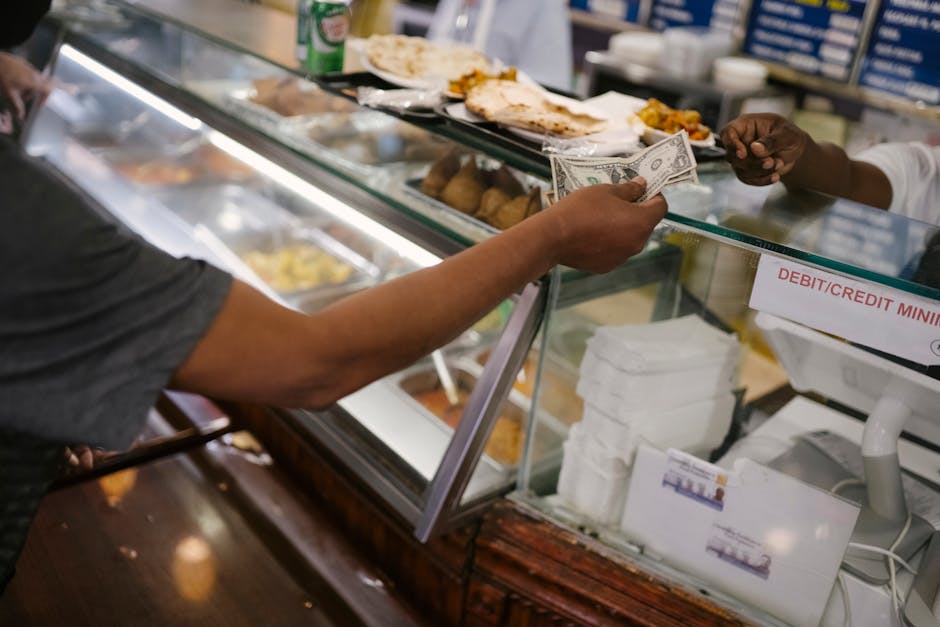
Cash is still very much alive in American wallets — but it's fighting for its place. According to the Federal Reserve's annual Diary of Consumer Payment Choice, cash ranked third among preferred payment methods at 16%, behind debit and credit cards. Cash held its third-place spot among payment methods for the sixth year in a row, the survey found. Meanwhile, over three-quarters of respondents carried cash as a backup, with an average of $69 on hand.

Who's actually using it? The picture is striking. Consumers aged 55 and older made around 10 cash payments per month, surpassing younger adults aged 18 to 24, who averaged just two. Rural residents paid with cash nine times a month, compared to six times for urban and suburban dwellers. Households with incomes below $25,000 were more likely to use cash than those with incomes exceeding $150,000, the survey found. In short, cash dependency tracks closely with age, geography, and economic vulnerability.

But the long-term trend is clear: cash is losing ground. A separate Atlanta Fed report found that the share of consumers making recent cash purchases dropped from 87% to 83% in a single year. Checks are fading even faster.

Some experts warn this shift carries real risks. Electronic payments rely on electricity and telecom infrastructure — both of which can collapse during natural disasters. And as more businesses go cashless, regulators are pushing back. New York now fines retailers up to $1,500 for repeatedly refusing cash, a sign that the debate over legal tender is far from settled.
Get more from every article

Highlight any word or phrase for an explanation or translation, save vocabulary, and bookmark articles.

📚 Key vocabulary

surpass (verb)
to be greater than or go beyond something in amount, number, or achievement
"Online sales figures this quarter are surpassing all previous records."
legal tender (noun)
the official money of a country that must be accepted as payment by law
"The new coins became legal tender as soon as the central bank issued them."
dependency (noun)
the state of relying heavily on something or someone
"The company's dependency on a single supplier created serious supply chain risks."
infrastructure (noun)
the basic systems and structures that a country or organization needs to function, such as roads, power, and communications
"A cyberattack on financial infrastructure could disrupt millions of transactions overnight."
regulator (noun)
a person or organization that officially controls an industry or business activity and makes sure rules are followed
"Regulators are reviewing the bank's lending practices to ensure they comply with consumer protection laws."

✨ Useful phrases for this topic

"carry cash as a backup"
Use this when explaining that someone keeps cash available just in case their primary payment method doesn't work.
"Even though she prefers contactless payments, she always carries cash as a backup when traveling abroad."
"go cashless"
Use this to describe a business or society that stops accepting physical money and moves entirely to digital or card payments.
"Several major retailers in the city have decided to go cashless in order to speed up checkout times."
"losing ground"
Use this when something is becoming less popular, powerful, or competitive compared to alternatives.
"Traditional banking is losing ground as more customers switch to mobile-first financial apps."

Advanced sentence structures

Patterns from this article you can use in meetings, emails, and everyday English

Structure 1

In context

Households with incomes below $25,000 were more likely to use cash than those with incomes exceeding $150,000, the survey found.

The skeleton

Frame: [Group A] were more likely to [verb phrase] than those with [defining characteristic], [source] found.

What it does: Compares the behaviour or habits of two groups by highlighting a difference in likelihood.

Quick swap: "Workers in large cities were more likely to commute by public transport than those in smaller towns, the study found."

More examples

  • "Younger employees were more likely to request flexible working hours than those in senior management positions."
  • "Patients with a family history of diabetes were more likely to develop the condition than those without any known risk factors."
  • "Students who read for pleasure were more likely to score highly on comprehension tests than those who read only for coursework."

Easy exercise

Arrange the words and add the missing structural elements to build a correct sentence.

  1. rural residents · nine times a month · use cash · urban dwellers · more likely to · than
  2. freelance workers · save receipts carefully · salaried employees · more likely to · than those who are
Show answers
  • "Rural residents were more likely to use cash nine times a month than urban dwellers."
  • "Freelance workers were more likely to save receipts carefully than those who are salaried employees."

Open exercise

Write your own sentence using this structure. You can write about anything — here are some ideas if you need them:

  • Different age groups and their payment habits
  • How experience level affects workplace behaviour
  • Food or lifestyle choices across different income groups

One possible answer: "People who cook at home regularly are more likely to track their food spending than those who eat out most days."

Structure 2

In context

Cash held its third-place spot among payment methods for the sixth year in a row, the survey found.

The skeleton

Frame: [Subject] held its [position/status] [among/in/as] [category] for the [ordinal number] year in a row.

What it does: States that something has maintained the same position or status continuously over a repeated period.

Quick swap: "The local team held its top spot in the regional league for the third year in a row."

More examples

  • "The company held its position as the market leader in renewable energy for the fourth year in a row."
  • "She held her place on the national rankings for the fifth year in a row, despite strong competition."
  • "The city held its status as the most visited tourist destination in the region for the seventh year in a row."

Easy exercise

Arrange the words and add the missing structural elements to build a correct sentence.

  1. debit cards · the most popular payment method · held · for the sixth year in a row · their position as
  2. the café · the best brunch spot in the neighbourhood · for the third year in a row · held · its title as
Show answers
  • "Debit cards held their position as the most popular payment method for the sixth year in a row."
  • "The café held its title as the best brunch spot in the neighbourhood for the third year in a row."

Open exercise

Write your own sentence using this structure. You can write about anything — here are some ideas if you need them:

  • A payment method or financial trend that has stayed consistent
  • A colleague, team, or company that has maintained a strong record
  • A personal habit or routine you have kept up over several years

One possible answer: "Our department held its record for the lowest error rate in the company for the second year in a row."

💬 Discussion questions

1

Think about your own daily life — when was the last time you paid with cash, and why did you choose it over a card or digital payment?

2

Some people argue that going fully cashless would be unfair to certain groups in society. Who do you think would be most affected, and what should businesses or governments do about it?

3

In your industry or workplace, how do payment trends affect how your company operates or serves its customers?